Animated vocabulary cards or story-based videos for young learners
Parents and educators looking to build a child's word bank often turn to short, engaging videos. Two popular formats have emerged: animated vocabulary cards that present a word, a definition, and an image, and story-based language videos that weave new words into a narrative. Both approaches aim to make learning feel less like a drill and more like play, but they work in different ways and suit different moments in a child's language journey.
Understanding the trade-offs between these two styles helps you choose the right tool for a particular child, topic, or learning goal. This article compares animated vocabulary cards and story-based language videos across several practical dimensions, so you can decide when each one fits best.
How animated vocabulary cards work
An animated vocabulary card is a short, focused clip - often under thirty seconds - that pairs a single word with a visual, a simple definition, and sometimes a short sentence or sound effect. The animation adds motion to the image: a word like "gigantic" might show a tiny character standing next to a huge object that grows even larger on screen. The child sees the word, hears it spoken, and sees a visual representation, all in a tight loop.
The strength of this format is clarity. There is no distracting storyline, no extra characters, and no need to follow a plot. The child’s full attention goes to the target word and its meaning. This makes vocabulary cards especially useful for introducing a new word for the first time, or for reviewing words that a child has already encountered in other contexts.
Another advantage is repetition. Because each card is short, a child can watch the same word several times in a row without losing focus. That repetition helps cement the word in memory, particularly for children who need more exposure before they feel confident using the word themselves.
However, vocabulary cards have a limitation: they show the word in isolation. The child learns what "gigantic" means, but may not yet understand how to use it naturally in a sentence or how it relates to other words. The card is a building block, not a full conversation.
How story-based language videos work
Story-based language videos take a different approach. Instead of presenting words one by one, they embed vocabulary inside a short narrative. A character might visit a magical forest where everything is gigantic, and the word appears several times as the character reacts to the oversized surroundings. The child picks up the meaning from context, from repetition within the story, and from the emotional cues of the characters.
This format has a major advantage: context. When a child hears "gigantic" inside a story, they also learn how the word fits into sentences, what kind of situations it describes, and how it relates to other words like "huge" or "enormous." The narrative gives the word a home, making it more likely that the child will remember and use it later.
Story-based videos also hold attention for longer. A well-told story with appealing characters and a simple plot can keep a child engaged for several minutes, which means more exposure to the target vocabulary in a single sitting. For children who resist direct instruction, the story format feels like entertainment, not study.
The trade-off is that stories introduce many elements at once: characters, setting, plot, dialogue, and sometimes music. A young child may focus on the story itself and miss the new word. For that reason, story-based videos work best when the child already has a basic vocabulary and can follow a narrative without needing every word explained.
When each format suits the learner
Animated vocabulary cards are a strong choice for the earliest stages of vocabulary building. A child who is just beginning to learn a language, or who struggles with attention, benefits from the simple, repetitive format. The card leaves no room for confusion: the word, the image, and the definition are the only things on screen. This clarity also helps children with learning differences, such as those who find it hard to filter out extra information.
Story-based videos, on the other hand, shine once a child has a foundation of common words. They expand that foundation by showing how words behave in real communication. A child who already knows the word "big" can learn "gigantic" by hearing it used in contrast within the story. The narrative also exposes children to grammatical structures and conversational patterns that cards cannot teach.
Age also plays a role. Very young children - toddlers and early preschoolers - often respond better to cards because their attention span is short and their ability to follow a plot is limited. Older preschoolers and early school-age children can handle the complexity of a story and may even prefer it, especially if the story is funny or adventurous.
Practical considerations for parents and educators
When choosing between the two formats, think about your goal. If you want to introduce a specific set of words - say, ten new words for a unit on animals - animated cards let you control exactly which words the child sees and in what order. You can pair the cards with other activities, such as drawing the animal or acting out its movement.

If your goal is broader, such as improving general listening comprehension or building a richer vocabulary over time, story-based videos are more efficient. A single five-minute story can expose a child to a dozen new words in a natural context, along with repeated examples of how those words are used.
Another factor is the child's mood and energy level. Cards work well for a quick warm-up or a calm-down activity. Stories work well when the child is ready to sit still for a few minutes and engage with a narrative. Some families use both formats on different days or even in the same session: start with a few cards to preview the words, then watch a story that uses those words in context.
Tools like Fluxnote children’s vocabulary videos combine both approaches by letting you generate cartoon-style videos that can be either card-like or story-based, depending on how you shape the input. The key is knowing which format matches the child's current needs.
When you create your own videos, you can also mix elements. A card-style segment at the beginning of a story video can preview the key words, and the story itself can then reinforce them. That hybrid approach gives the child the clarity of cards and the context of a narrative in a single viewing.
Limitations of each format
No single format works for every child or every situation. Animated vocabulary cards, despite their clarity, can become boring if used too often. A child who watches card after card may start to tune out, and the words may never move from short-term memory into active use. Cards also miss the social and emotional cues that come from watching characters interact.
Story-based videos have their own drawbacks. A child might enjoy the story but fail to notice the new words, especially if the animation is busy or the dialogue is fast. Some children become so attached to a particular story that they want to watch it repeatedly, which is fine for enjoyment but less efficient for vocabulary growth if the same words are heard over and over without variation.
Both formats require thoughtful selection. A well-made card or story can teach effectively; a poorly made one can confuse or bore. Look for videos that use clear audio, simple visuals, and language that matches the child's current level. Avoid videos that cram too many words into a short time or that use vocabulary far above the child's comprehension.
Making the choice for your child
There is no single right answer. The best approach depends on the child's age, language level, attention span, and personal preferences. Many families find that a rotation works well: cards for introducing new words, stories for deepening understanding, and a mix of both for review and reinforcement.
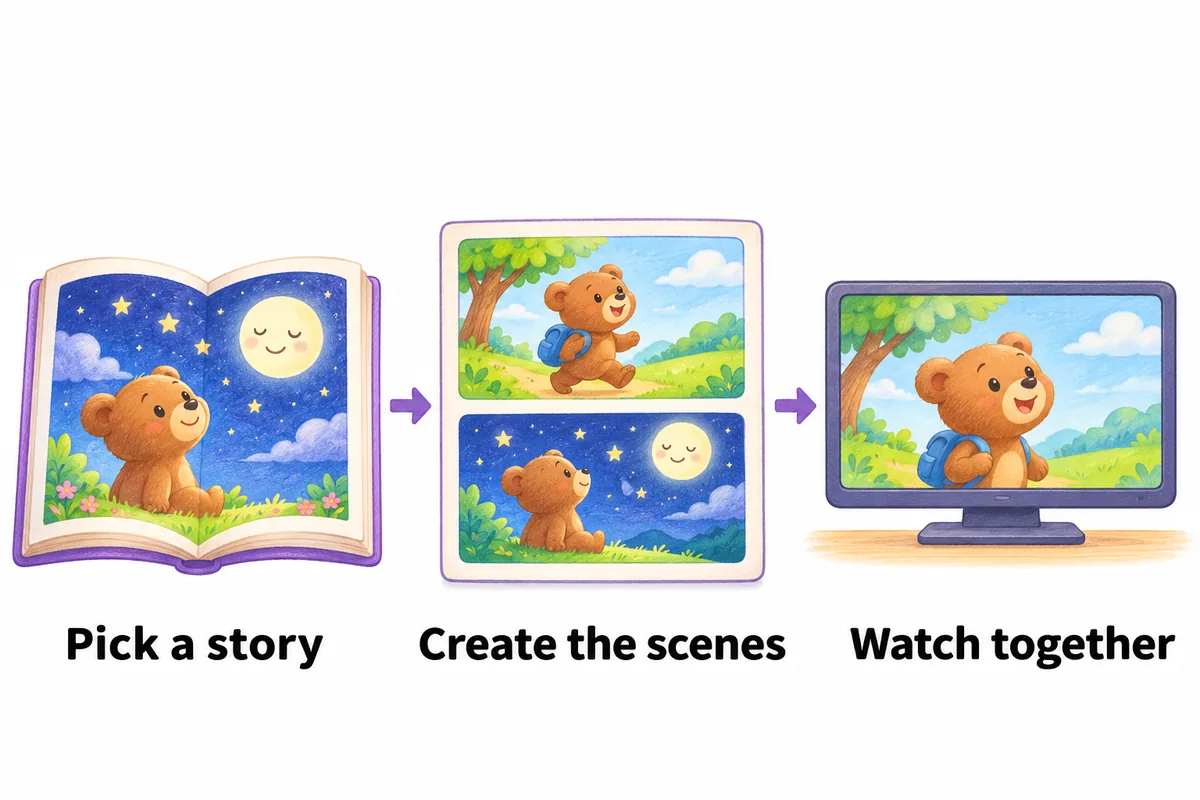
If you are just starting, try a few card-style videos and see how the child responds. If they stay engaged and can repeat the word after watching, cards are a good fit. If they seem bored or distracted, switch to a story-based video and see if the narrative holds their attention better. Over time, you will develop a sense of which format clicks for different topics and moods.
Platforms such as Fluxnote children’s vocabulary videos allow you to experiment with both formats without needing separate tools. The AI video generator can produce short, focused clips or longer narrative videos, so you can adapt as your child grows.
Ultimately, the most effective vocabulary learning happens when a child encounters a word in multiple contexts over time. Cards and stories each contribute something valuable: cards offer precision and repetition; stories offer context and emotional connection. Used together, they build a richer, more durable vocabulary than either format alone.
Fluxnote on social media
 Twitter
 LinkedIn
 Facebook
 Instagram
 YouTube
 Discord